Solid carbide cutters are among the most valuable tools in modern CNC machining. Made from tungsten carbide, these cutters are prized for their exceptional hardness, wear resistance, and ability to hold a sharp cutting edge even at high speeds and temperatures. Whether you’re machining aluminum, steel, titanium, or composite materials, choosing the right carbide cutter can significantly impact surface finish, tool life, and overall production efficiency.
In this blog, we’ll break down the most common types of solid carbide cutters used in CNC machining, their applications, and how to choose the right one for your project.
Why Choose Solid Carbide Cutters?
Before diving into the types, it’s worth understanding why solid carbide is such a popular choice in CNC machining:
- High hardness – carbide retains a sharp edge far longer than high-speed steel (HSS)
- Heat resistance – performs well under high-speed, high-temperature cutting conditions
- Rigidity – reduces deflection, resulting in tighter tolerances and better finishes
- Longer tool life – fewer tool changes mean less downtime and lower per-part cost
- Versatility – suitable for a wide range of materials, from soft aluminum to hardened steel
Types of Solid Carbide Cutters
1. End Mills
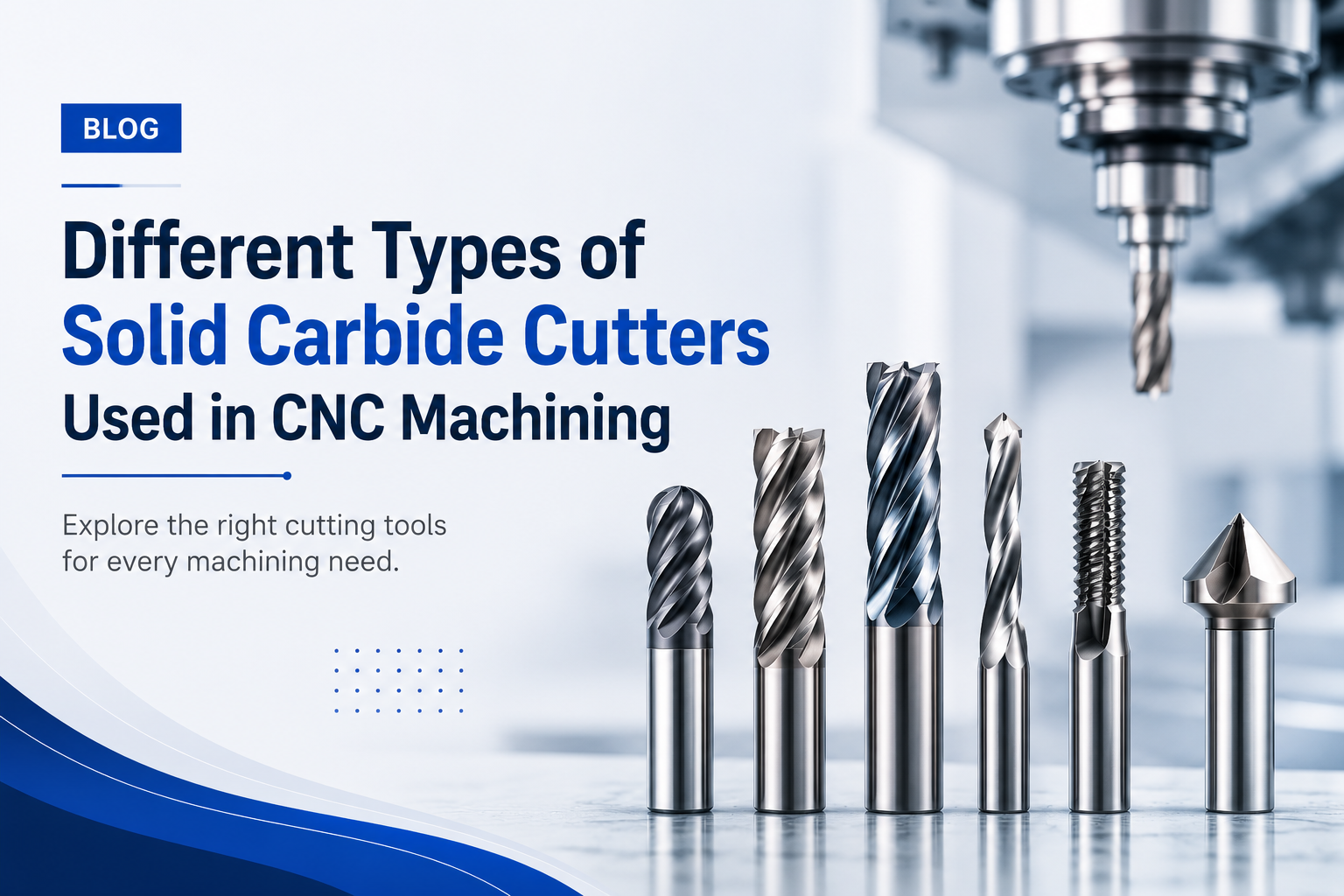
End mills are the most widely used carbide cutting tools in CNC machining. They’re used for milling slots, contours, pockets, and profiles. Common variations include:
- Square end mills – flat-bottomed, ideal for general-purpose milling and creating sharp corners
- Ball nose end mills – rounded tip, used for contour milling, 3D surfacing, and mold work
- Corner radius end mills – combine strength and finish quality by reducing stress at the cutting edge
- Roughing end mills – feature a serrated edge for fast material removal with reduced cutting forces
2. Face Mills
Face mills are designed to machine flat surfaces efficiently. While many face mills use replaceable inserts, solid carbide versions are also used for smaller-diameter applications where rigidity and precision are critical.
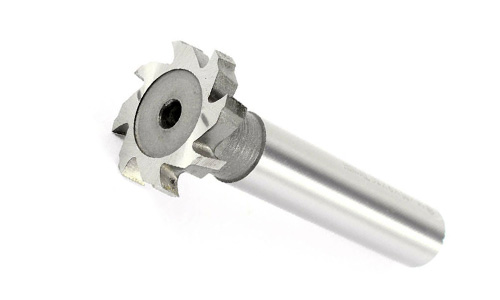
3. Slotting Cutters
Slotting cutters are built specifically for cutting slots and grooves with high accuracy. Solid carbide slotting cutters offer excellent edge retention, making them ideal for repetitive slotting operations in tough materials.
4. Chamfer and Deburring Cutters
These cutters are used to remove sharp edges, create beveled edges, and clean up burrs left behind from other machining operations. Solid carbide chamfer cutters maintain a clean, consistent edge across long production runs.
5. Engraving Cutters
Engraving cutters feature a fine, pointed tip and are used for marking, lettering, and fine detail work. Solid carbide construction ensures precision and durability even at very small tip diameters.
6. Thread Milling Cutters
Thread mills are used to cut internal or external threads through a helical milling motion rather than a single-pass cutting action. Solid carbide thread mills offer better thread accuracy and are especially useful for hard materials and large thread diameters.
7. Form Cutters
Form cutters are custom-profiled tools designed to cut a specific shape or contour in a single pass. These are often used in specialized production runs where a unique geometry needs to be reproduced consistently.
8. High-Feed Cutters
High-feed cutters are designed for aggressive material removal at high feed rates while keeping cutting forces low. They’re commonly used in roughing operations where productivity is a priority.
Choosing the Right Carbide Cutter
When selecting a solid carbide cutter for a CNC machining project, consider the following factors:
- Material being machined – different coatings and geometries are optimized for aluminum, steel, stainless steel, titanium, or composites
- Cutting operation – roughing, finishing, slotting, contouring, or engraving each require different cutter geometries
- Coating type – coatings like TiAlN, TiN, or AlTiN can improve heat resistance and tool life depending on the application
- Flute count – fewer flutes allow better chip evacuation for soft materials, while higher flute counts suit finishing passes and harder materials
- Tool diameter and length – should match the depth and precision requirements of the feature being cut
Frequently Asked Questions
1. What makes solid carbide cutters different from carbide-tipped or insert-style tools? Solid carbide cutters are made entirely from tungsten carbide, whereas carbide-tipped tools only have a carbide edge brazed onto a steel body, and insert-style tools use replaceable carbide inserts. Solid carbide construction offers greater rigidity, better heat resistance, and tighter tolerances, making it ideal for precision work and smaller tool diameters.
2. How long do solid carbide cutters typically last? Tool life depends on the material being cut, cutting parameters, coating, and machine setup. However, solid carbide cutters generally outlast HSS tools by a significant margin due to their superior hardness and wear resistance.
3. Can solid carbide cutters be used on all materials? Solid carbide cutters are versatile and can machine a wide range of materials, including aluminum, steel, stainless steel, titanium, and composites. That said, the geometry, flute count, and coating should be matched to the specific material for best results.
4. Do solid carbide cutters need coatings? Coatings aren’t always required, but they can significantly extend tool life and improve performance. Coatings like TiAlN and AlTiN improve heat resistance and reduce friction, which is especially beneficial when machining harder materials or running at higher speeds.
5. Why do solid carbide cutters cost more than HSS tools? Solid carbide is more expensive to produce due to the material and manufacturing process involved. However, the higher upfront cost is often offset by longer tool life, faster cutting speeds, and reduced downtime, resulting in lower overall cost per part.
6. How do I choose the right flute count for my application? Lower flute counts (2–3 flutes) provide better chip evacuation and are suited to softer materials like aluminum. Higher flute counts (4 or more) offer better surface finish and are better suited to harder materials and finishing passes.
7. Can a damaged solid carbide cutter be resharpened? Yes, many solid carbide cutters can be resharpened or reconditioned, which helps extend their usable life and reduce tooling costs. However, resharpening should be done by a qualified tool grinding service to maintain proper geometry and performance.
Conclusion
Solid carbide cutters play a critical role in achieving precision, efficiency, and consistency in CNC machining. From end mills and face mills to thread mills and engraving cutters, each type serves a specific purpose in the manufacturing process. Understanding the strengths of each cutter type allows machinists and manufacturers to select the right tool for the job, ultimately improving productivity, part quality, and tool longevity.