When it comes to CNC machining, the material of a cutting tool often gets the spotlight – but geometry is just as important, if not more so. The shape, angle, and structure of a cutter directly influence how it engages with the workpiece, how efficiently it removes material, and how long it lasts. Understanding cutter geometry helps machinists select the right tool for the job, optimize cutting parameters, and avoid costly mistakes like premature wear, poor surface finish, or tool failure.
In this blog, we’ll explore the key elements of cutter geometry and how each one impacts tool performance in CNC machining.
What Is Cutter Geometry?
Cutter geometry refers to the physical design features of a cutting tool, including the angles, edges, and shapes that determine how it interacts with the material being machined. These features affect chip formation, cutting forces, heat generation, surface finish, and overall tool life. Even two tools made from the same carbide grade can perform very differently depending on their geometry.
Key Elements of Cutter Geometry
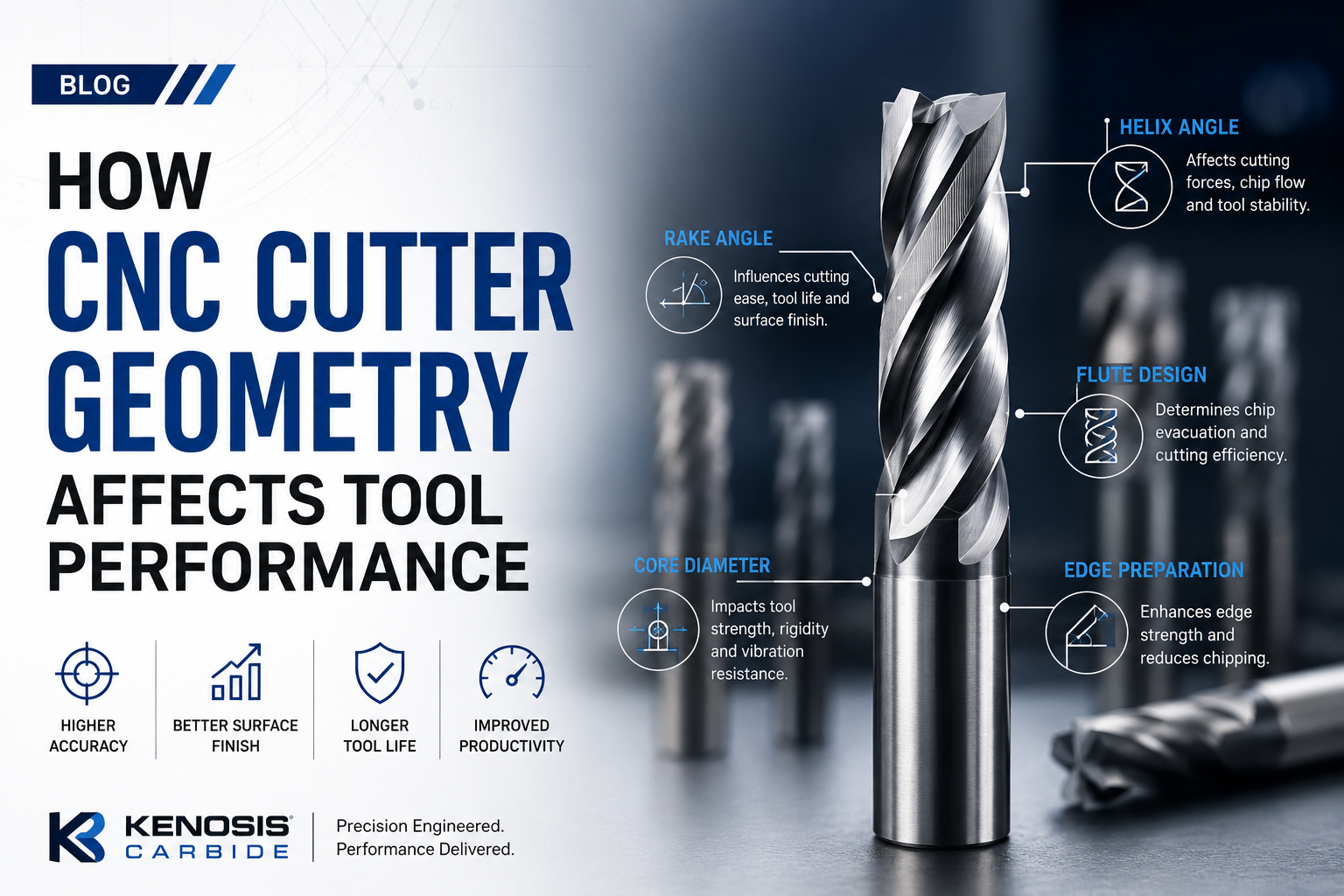
1. Rake Angle
The rake angle is the angle of the cutting face relative to the workpiece surface. It plays a major role in how easily a tool cuts through material.
- Positive rake angle – reduces cutting forces and heat generation, making it ideal for softer materials like aluminum
- Negative rake angle – increases edge strength, making it better suited for harder materials like steel and titanium, though it generates more heat and cutting force
- Neutral rake angle – offers a balance between strength and cutting efficiency
2. Relief (Clearance) Angle
The relief angle prevents the cutting edge from rubbing against the workpiece after making a cut. Too little relief causes excessive friction and heat, while too much relief can weaken the cutting edge, leading to chipping or premature failure.
3. Helix Angle
The helix angle refers to the spiral angle of the flutes along the cutter body. It has a significant impact on chip evacuation, cutting smoothness, and surface finish.
- Low helix angle – provides a stronger edge, better suited for hard materials and roughing operations
- High helix angle – improves chip evacuation and produces a smoother finish, making it ideal for finishing passes and softer materials
4. Flute Count and Design
Flutes are the grooves that run along the length of the cutter and are responsible for removing chips from the cutting zone.
- Fewer flutes (2–3) – allow larger chip clearance, ideal for soft materials that produce large chips, such as aluminum
- More flutes (4+) – offer better surface finish and are suited to harder materials with smaller, finer chips
Flute design also affects the balance between rigidity and chip evacuation efficiency, which directly impacts tool life and cutting speed.
5. Core Diameter
The core diameter is the solid center of the cutter body beneath the flutes. A larger core diameter increases rigidity and reduces the risk of deflection or breakage, especially during aggressive cutting operations. However, too large a core can limit flute space, reducing chip evacuation capability.
6. Cutting Edge Radius
The cutting edge radius refers to the sharpness of the edge at a microscopic level. A sharper edge reduces cutting forces and produces cleaner cuts, but it may be more prone to chipping. A slightly rounded or “honed” edge increases strength and durability, particularly useful for interrupted cuts or harder materials.
7. Point Geometry (for Pointed Cutters)
For cutters with pointed tips, such as engraving or specialty profiling tools, the point angle affects precision and strength. A sharper point allows for finer detail work, while a more obtuse angle improves durability for general-purpose applications.
How Geometry Impacts Performance
| Geometry Factor | Impact on Performance |
|---|---|
| Rake Angle | Cutting force, heat generation, edge strength |
| Relief Angle | Friction, heat buildup, edge durability |
| Helix Angle | Chip evacuation, surface finish, cutting smoothness |
| Flute Count | Chip clearance, surface finish, rigidity |
| Core Diameter | Rigidity, deflection resistance, chip space |
| Edge Radius | Cutting force, edge strength, finish quality |
Choosing the Right Geometry for Your Application
Selecting the correct cutter geometry depends on several factors:
- Material hardness – harder materials typically require stronger geometries with negative rake angles and lower helix angles
- Cutting operation – roughing operations benefit from geometries that prioritize strength and chip clearance, while finishing operations benefit from geometries that improve surface finish
- Machine rigidity and setup – less rigid setups may require geometries that reduce cutting forces to minimize vibration and deflection
- Desired surface finish – higher helix angles and increased flute counts generally produce smoother finishes
Frequently Asked Questions
1. Which single geometry feature has the biggest impact on tool performance? There isn’t one universal answer since it depends on the application, but rake angle and helix angle are often considered the most influential because they directly affect cutting force, heat generation, and chip evacuation.
2. Does a higher helix angle always mean better performance? Not necessarily. A higher helix angle improves chip evacuation and surface finish, but it can also reduce edge strength, making it less ideal for hard materials or heavy roughing operations where a lower helix angle may perform better.
3. Why do some cutters use a negative rake angle instead of positive? Negative rake angles increase edge strength, which helps when machining harder materials like steel and titanium. While they generate more cutting force and heat than positive rake angles, the added strength reduces the risk of chipping or premature edge failure.
4. How does flute count affect cutting speed and finish? Fewer flutes allow for larger chip clearance and are better suited to soft materials that produce large chips, while more flutes improve surface finish but reduce chip space, making them better suited to harder materials and finishing passes.
5. Can cutter geometry compensate for machine rigidity issues? To some extent, yes. Choosing a geometry that reduces cutting forces, such as a positive rake angle or a design with a larger core diameter, can help minimize vibration and deflection on less rigid setups, though it isn’t a substitute for proper machine setup.
6. Is a sharper cutting edge always better? Not always. A sharper edge reduces cutting forces and produces cleaner cuts, but it’s more prone to chipping. A honed or slightly rounded edge sacrifices a bit of sharpness for added durability, which is often preferable for interrupted cuts or harder materials.
7. How do I know which geometry is right for my specific job? The right geometry depends on the material being machined, the type of operation (roughing vs. finishing), machine rigidity, and the desired surface finish. Consulting tool manufacturer recommendations and testing under real cutting conditions is the best way to confirm optimal performance.
Conclusion
Cutter geometry is one of the most influential factors in CNC machining performance. From rake and relief angles to flute count and helix design, every geometric feature plays a role in how efficiently a tool cuts, how much heat and force it generates, and how long it lasts. By understanding these design elements, machinists can make smarter tool selections, improve production efficiency, and achieve better results across a wide range of materials and applications.