Most fastener manufacturers have a version of the same story. Production is running well, output numbers look reasonable, and then a customer sends back a batch slots inconsistent, thread profiles off, surface finish failing inspection. The investigation starts with the machine, then the fixture, then the operator. It usually ends at the tooling. Specifically, it ends at a worn or under-specified tool that was never quite right for the job.
Choosing the right carbide cutting tools for bolt and nut manufacturing is not a one-time decision you make when you set up the line. It is an ongoing specification process matching tool geometry, grade, and coating to the material you are cutting, the tolerances your customers demand, and the production volumes your business needs to hit. Get it right and your rejection rate drops, your changeover frequency falls, and your cost per part goes down. Get it wrong and you are managing problems downstream that should have been solved at the tooling stage.
This guide covers the full picture: the types of industrial cutting tools used across bolt and nut manufacturing, what each tool does and why it matters, how to match the specification to the operation, and what to look for when selecting a supplier. Whether you are setting up a new fastener line or trying to improve consistency on an existing one, the decisions outlined here will directly affect the quality and cost of what comes off your machines.
1. Why Carbide Cutting Tools Are the Standard in Fastener Manufacturing
There was a time when high-speed steel covered most of what fastener production needed. That time has largely passed, at least for manufacturers running serious volumes. The shift happened because the demands on tooling changed: tighter tolerances, harder materials, faster cycle times, and the kind of output consistency that customers in automotive, aerospace, and construction now expect as standard.
Solid tungsten carbide handles those demands in a way HSS fundamentally cannot. The hardness advantage carbide sits at HRA 89–93, HSS at HRC 62–65 means a carbide edge holds its geometry significantly longer under the same cutting conditions. In practical terms: a carbide slitting cutter running a bolt head slot in stainless steel will typically outlast its HSS equivalent by a factor of five to ten. At a production rate of thousands of pieces per shift, that difference translates directly into fewer changeovers, fewer dimensional rejects, and lower tooling cost per part even though the unit cost of a carbide tool is higher.
The heat tolerance argument matters just as much. Stainless steel, alloy steel, and high-strength fastener materials generate significant cutting heat regularly exceeding 600°C at production speeds. That is the threshold at which HSS begins to soften and lose its edge. Carbide remains stable well beyond that point, which means carbide cutters maintain their dimensional accuracy through shifts where HSS tools would require multiple interventions.
There is also the surface finish question. In fastener manufacturing, a rough slot wall or inconsistent chamfer is not just an aesthetic problem it is a functional one. Bolts with rough driver recesses fail torque transfer tests. Nuts with inconsistent thread profiles create assembly problems in the field. The cutting edge geometry of a well-specified carbide cutting tool holds tight enough, long enough, to keep surface finish within spec across a full production run. HSS, once it starts to wear, does not.
2. The Core Carbide Tools Used in Bolt & Nut Manufacturing
Fastener production is not a single operation it is a sequence of machining steps, each of which has its own tooling requirement. Here is a breakdown of the main bolt manufacturing tools and nut manufacturing tools in use at a modern fastener facility, with notes on what each one actually does and where the specification decisions matter most.
Carbide Slitting Cutters
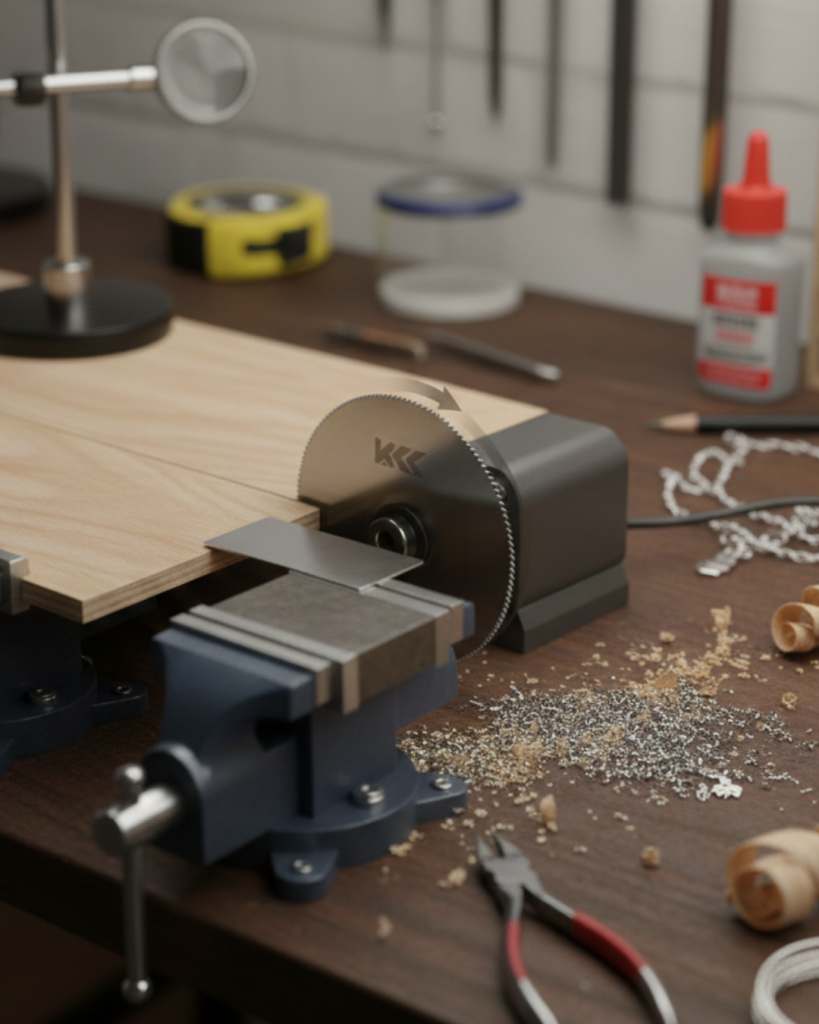
The most widely used carbide cutters in bolt manufacturing are slitting cutters the tools that cut the slot, Phillips recess, or hex drive profile into the fastener head. The tolerance requirements here are strict: slot width typically needs to land within ±0.03 mm, and depth within ±0.05 mm, consistently across thousands of pieces. A carbide slitting cutter with the right OD, tooth count, and coating holds those numbers through a full shift. An under-specified tool drifts and dimensional drift in bolt slotting shows up as driver slippage, failed torque tests, and customer returns.
Standard slitting cutter configurations for fastener industry tools typically run ODs of 10–25 mm with 12–20 teeth, depending on the material hardness and the required surface finish. For stainless fasteners, TiAlN coating is the standard recommendation. For mild steel, TiN or uncoated carbide covers most applications.
Carbide Drills and Reamers
Bolt shank boring and through-hole operations in fastener blanks require carbide drills that can maintain consistent bore diameter across high-volume runs. In automotive fastener production where bolt hole tolerances directly affect assembly fit bore variation of even 0.02 mm is enough to cause a failure. Carbide drills with appropriate flute geometry and coating for the workpiece material deliver the bore consistency that standard HSS drills cannot sustain at production volumes.
Reamers are used where the bore finish requirements go beyond what drilling alone can achieve. A carbide reamer after a carbide drill is a standard two-step process for high-precision fastener bores – the drill removes the bulk material, the reamer brings the hole to final dimension with the surface finish the application requires.
Carbide Form Tools and Thread Mills
Thread rolling and thread milling in fastener production particularly for stainless steel and high-strength alloy fasteners puts significant demands on tooling. Carbide form tools for thread rolling hold their profile geometry significantly longer than HSS equivalents, which matters because thread profile deviation is one of the most common causes of fastener rejection in quality control. For nut manufacturing specifically, carbide thread mills offer a more stable thread geometry in harder materials than traditional tapping.
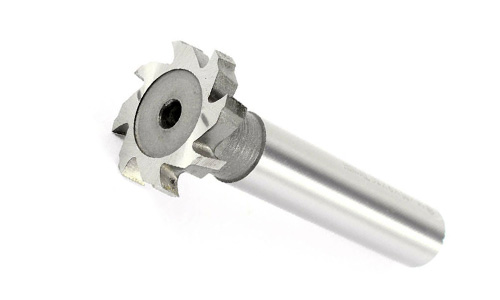
Carbide Chamfer Tools and T-Slot Cutters
Chamfering the bolt head entry and the nut face is a finishing operation that affects both function and appearance. A burr on a bolt head chamfer causes assembly problems; an uneven chamfer on a nut face fails visual inspection. Carbide chamfer tools maintain the geometry and edge sharpness needed to produce clean, consistent chamfers without the edge degradation that creates burrs in production.
T-slot cutters are used for specialty fastener recesses and non-standard drive profiles particularly in aerospace and automotive applications where custom fastener geometry is common. These are almost always custom-specified tools, engineered to the drawing rather than selected from a catalogue.
Here is a summary of the core tool types and their primary applications in bolt and nut manufacturing:
| Tool Type | Application | Material Cut | Typical OD | Key Advantage |
| Carbide Slitting Cutter | Bolt head slotting | Steel / Stainless | 10–25 mm | Precision slot depth |
| Carbide Form Tool | Thread rolling / forming | Alloy steel | Custom | Profile accuracy |
| Carbide Drill | Bolt hole boring | Mild / alloy steel | 1–20 mm | Consistent bore diameter |
| Carbide Reamer | Hole finishing | Any fastener alloy | 3–25 mm | Tight tolerance finish |
| Carbide Chamfer Tool | Bolt head chamfering | Stainless / alloy | Custom | Burr-free entry profile |
| Carbide T-Slot Cutter | Special recesses | Steel / titanium | 12–50 mm | Complex profile cutting |
3. Material Matters: Matching the Tool to the Fastener Stock
One of the most common tooling mistakes in fastener manufacturing is treating all steel as the same. Mild steel, stainless steel, alloy steel, and hardened steel behave very differently at the cutting interface and the industrial cutting tools that perform well on one will underperform or fail on another if the grade and coating are not matched to the material.
Mild steel (Grade 4.6–8.8 fasteners) : the most forgiving material for tooling. Uncoated or TiN-coated carbide works well at standard cutting speeds. Tool life is predictable and changeover intervals are easy to schedule.
Stainless steel (A2, A4, 316 grade fasteners) : the most demanding material for tooling in standard fastener production. Stainless work-hardens as it is cut, which means the cutting zone gets harder the longer the tool stays in contact. TiAlN coating is essential here the heat resistance it provides is what keeps the cutting edge from degrading in the work-hardened zone.
High-strength alloy steel (Grade 10.9, 12.9 fasteners) : requires careful grade and coating selection. AlTiN coating for hardened stock, TiAlN for standard alloy grades. Cutting speeds need to be dialled down compared to mild steel running alloy steel at mild steel parameters is a reliable way to get through carbide tools faster than the economics justify.
Titanium and Inconel (aerospace fasteners): specialist territory. These materials require specific carbide substrate grades, precise cutting parameters, and usually AlTiN or specialist coatings. If your facility produces aerospace fasteners in titanium or Inconel, the tooling specification should be developed with the carbide manufacturer’s engineering team rather than adapted from a standard catalogue.
The single most common cause of premature tool failure in fastener production is running a tool specified for one material on a different material. The tool is not wrong the specification is.
4. Tool Selection Quick Reference
The table below is a practical starting point for specifying the right carbide cutting tools against the most common fastener manufacturing operations. These are recommended combinations specific production conditions may require adjustment:
| Operation | Workpiece | Recommended Tool | Coating |
| Bolt head slotting | Mild steel | Carbide slitting cutter | TiN or uncoated |
| Bolt head slotting | Stainless steel | Carbide slitting cutter | TiAlN |
| Hex recess cutting | Alloy steel | Carbide form tool | TiAlN / AlTiN |
| Nut thread tapping | Mild steel | Carbide tap / thread mill | TiN |
| Shank boring | Stainless | Carbide drill | TiAlN |
| Chamfer & deburr | Any steel | Carbide chamfer tool | TiN or uncoated |
| Custom recess profile | Titanium / Inconel | Carbide T-slot / form tool | AlTiN |
A few points on the table worth highlighting. The TiAlN recommendation for stainless slotting is not optional it is the result of running the same operation with TiN and uncoated tooling and measuring the tool life difference. The gap is large enough that TiN on stainless is genuinely false economy. On the other end, uncoated carbide on mild steel chamfering is often the right call there is no performance benefit to a coated tool in that application, and the uncoated tool is easier to regrind in-house.
5. Getting More From Your Tooling: Practical Life Extension
Even the best-specified bolt manufacturing tools will underperform if the surrounding practices are not right. The biggest gains in tool life often come not from upgrading the tool but from addressing the conditions the tool is running in.
Machining Parameters
Running too fast generates heat that shortens carbide tool life. Running too slow means the tool is rubbing rather than cutting which also generates heat without doing productive work. The correct cutting speed and feed rate for your material and tool specification should come from the carbide manufacturer’s recommendations, then be validated against your actual machine rigidity and coolant delivery. Parameters that work on a rigid CNC bolt former will not be optimal on an older cam-driven machine with less vibration damping.
Coolant and Chip Clearance
High-pressure coolant is essential for stainless and alloy steel fastener production. It does two things: manages cutting zone temperature and clears chips out of the slot before they get re-cut and damage the cutter edge. Re-cut chips are one of the most underappreciated causes of premature tool failure in slotting operations. In aluminium fastener components, dry machining or compressed air is often preferable to liquid coolant some cutting fluids react with aluminium and leave residues that affect downstream plating or anodising processes.
Regrinding Programme
Solid carbide tools can be reground multiple times, typically three to five cycles before the geometry becomes too compromised to hold tolerance. The key is catching wear at the right point: early enough for a clean regrind, not so early that usable tool life is discarded. The most practical approach is to track piece count per tool and inspect at consistent intervals rather than waiting for visible failure. A tool that is inspected and reground at 80% wear produces far better regrind quality and more subsequent cycles than one that is run to failure and then sent out.
Piece count tracking per tool is the single most cost-effective practice a fastener manufacturer can implement. It costs nothing except discipline, and it pays for itself in extended regrind cycles and fewer unexpected production stops.
6. Selecting a Carbide Tool Manufacturer India: What to Actually Look For
The sourcing decision for a carbide tool manufacturer India is not simply about price per unit. There are suppliers who will sell you a tool that looks identical to a high-quality carbide tool but does not hold the same dimensional consistency across a batch and in fastener production, batch-to-batch consistency is what determines whether your quality control process is catching exceptions or managing the norm.
Here is what to look for in practical terms:
• Grinding precision and tolerance documentation: a credible carbide tool manufacturer should be able to tell you the OD tolerance, thickness tolerance, and runout specification they hold on their standard products. If the answer is vague, that tells you something.
• Coating quality and batch consistency: PVD coating thickness variation across a batch of tools directly affects tool life consistency in production. Ask for coating hardness certification and find out what batch testing the manufacturer runs.
• Custom engineering capability: standard catalogue products cover most fastener tooling needs. But if your production runs non-standard fastener profiles or unusual material combinations, you need a supplier whose engineering team can design to your drawing rather than adapt an off-the-shelf product.
• Regrinding and recoating support: a supplier who supports the full tool lifecycle grinding, regrinding, recoating is more valuable than one who only sells new tools. The total cost of tooling includes all of those stages.
Kenosis Carbide, based in Rajkot, Gujarat, manufactures carbide cutters for the fastener industry alongside products for automotive, jewellery, and general engineering sectors. Their standard range covers slitting cutters, T-slot cutters, and custom-profile tools, with an engineered-to-order programme for non-standard requirements. Their engineering team is available from the first inquiry, which matters when you are trying to solve a specific production problem rather than selecting from a catalogue.
7. Frequently Asked Questions
How do I know when a carbide slitting cutter needs regrinding?
Three signals to watch: slot width starting to drift outside tolerance, surface finish degradation on the slot walls (look for chatter marks or rough texture under a loupe), and any increase in cutting noise or vibration. The last one is the easiest to catch in a noisy production environment by the sound change it produces a sharp cutter cuts quietly and cleanly. When any two of these three signals appear together, the cutter needs attention.
Can one carbide slitting cutter be used across different bolt materials?
Technically yes, but practically it is not the best approach. A TiAlN-coated cutter optimised for stainless will work on mild steel but you will be paying a coating cost premium that delivers no additional benefit on mild steel. Conversely, running a TiN-coated or uncoated cutter on stainless will produce shorter tool life and worse surface finish than the correct specification. It is worth maintaining separate tool specifications for mild steel and stainless production if you run both.
What is the minimum order quantity for custom carbide tools?
This varies by manufacturer. For Kenosis Carbide’s engineered-to-order programme, the specific minimum quantities depend on the complexity of the tool and the manufacturing process required. The most direct approach is to share your drawing or specification with their engineering team they will advise on feasibility and minimum quantities as part of the initial conversation, not after a lengthy quoting process.
Is a carbide tool always better than HSS for fastener production?
For high-volume production of steel fasteners, mild, stainless, or alloy yes, in practice. The economics, quality consistency, and tool life data are consistently in carbide’s favour once you account for total cost per part rather than unit tool cost. The exception is very low-volume or prototype work where the volume does not justify the carbide tool investment, and short-run HSS tooling is the more pragmatic choice.
Conclusion
Fastener manufacturing is a precision business operating at high volume, and the tooling is where precision and volume meet. The right carbide cutting tools matched to the right material, running at the right parameters, maintained correctly are what separate a production line that consistently hits specifications from one that manages quality problems reactively.
The decisions covered in this guide tool type selection, material matching, coating specification, parameter setting, and regrinding practice are not complicated in principle. The challenge is applying them consistently across the variety of materials, tolerances, and volumes that a real fastener production facility deals with every shift. That is where a technically capable supplier makes a real difference: not just as a vendor, but as an engineering resource you can consult when the specification question is not straightforward.
Kenosis Carbide manufactures standard and custom carbide cutters for the fastener industry from their facility in Rajkot, Gujarat. For enquiries about standard product specifications or custom tooling requirements, their engineering team is available directly and that conversation is where most production tooling problems get solved.